The Art of Doing Nothing: Why Rest Feels Like Wasted Time in Midlife
Many women over 40 don’t struggle with rest as much as they struggle with what rest means. In midlife, even an unscheduled hour can trigger guilt, because so many of us were taught that time is only “good” when it produces something. This is about why doing nothing can feel like wasted time—and what changes when you stop treating every moment like it has to earn its place.
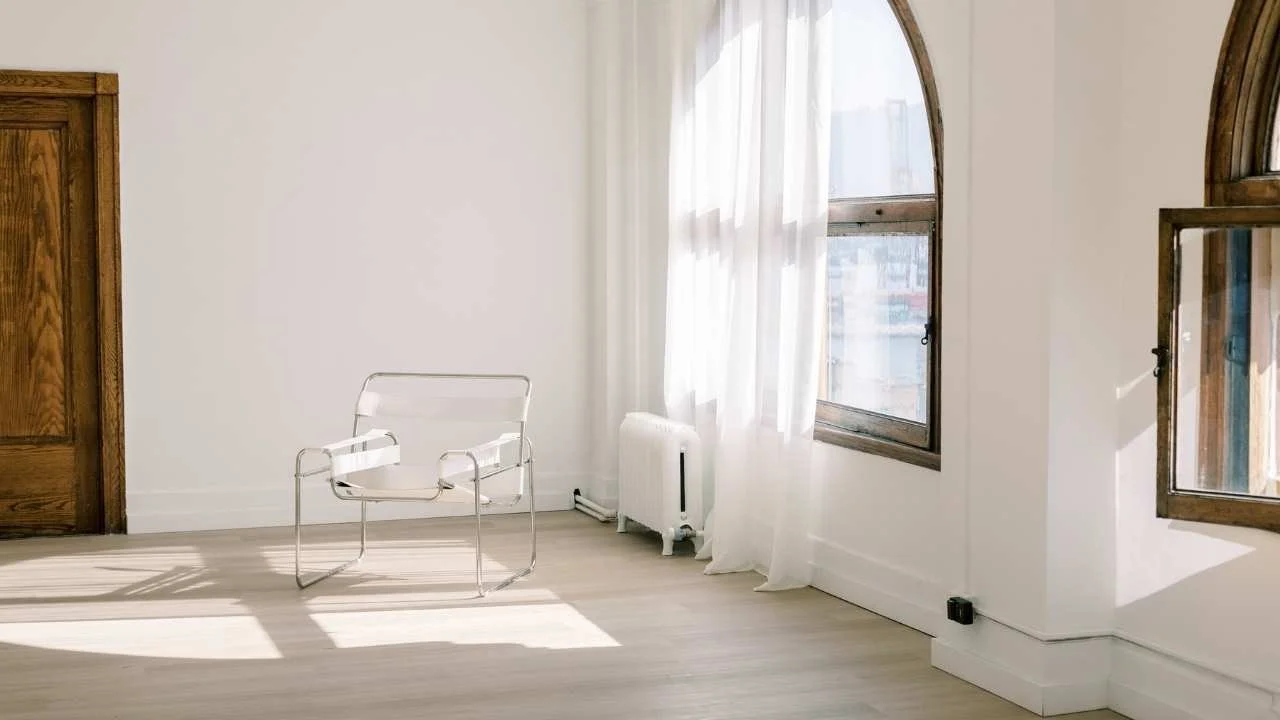
And yet some of the most restoring moments in life leave no visible result except this: you feel more like yourself when you stand up.
Dr. Oksana Skidan
I sat down at my desk the way I usually do when it is time to work, with the assumption that the writing would come. Usually, it does. I rarely arrive empty. There is almost always a thought already waiting for me. But that morning, nothing came.
I looked at the page, then away from it. Outside the window, the trees were fully green, that particular spring green that feels both fresh and already confident. Around me were the books I have lived with for years, row after row, their presence so familiar that it has become part of the room’s breathing. My dog, freshly cleaned and deeply content with life, was sleeping nearby without the slightest interest in productivity. And as I sat there in that ordinary, quiet, beautiful room, I realized that what I wanted was not another thought. Not another sentence. Not another useful idea.
I wanted to sit inside the moment exactly as it was and do nothing.
And almost immediately, another voice entered the room. Don’t waste your time.
It is one of those phrases that lives so deep in me that it no longer even sounds like language at first. It sounds like instruction. Since childhood, I have known that voice well: What are you doing? Don’t waste your time. It was never said cruelly. It was said as guidance, as discipline, as preparation for life. Time mattered. Time was not to be wasted.
And of course, at some point, I caught myself saying it too. That is always a strange moment, when a phrase leaves your mouth and, for a second, you hear not yourself, but your parent. It is almost funny until it isn’t.
As I was looking around my office, that was the moment the real question showed up.
What does it actually mean to waste time?
We use the phrase so easily, as if its meaning were obvious. But once I sat with it, it stopped being obvious at all. Can an afternoon be “wasted” simply because nothing measurable came out of it?
Can a still hour be a waste? Can a year be a waste?
Continue reading - Why Midlife Women Need Silence More Than Ever
Where the “Don’t Waste Your Time” Voice Comes From
Not long ago, before my son was accepted to George Washington University, we talked about the possibility of a gap year. My mother said, very naturally, “I’m not sure you want him to waste a year.”
Waste a year.
The phrase stayed with me because it carries a whole worldview inside it: a year in which no visible result is produced. A year that doesn’t follow the approved timeline. A year spent growing up, thinking, living, gathering yourself.
Sitting at my desk that day, I found myself asking the same question on a smaller scale. Was I wasting time because I wasn’t producing? Because I wasn’t moving quickly enough from thought to result?
Or was something else happening there—something more necessary than the sentence I had intended to begin?
Continue reading - Spring in Midlife: What Had Been Missing Was Permission
Why Women Over 40 Turn Even Rest Into Productivity
As I kept circling the idea, a book title came to mind: The Art of Doing Nothing. What got my attention even more than the title was the subtitle: Simple Ways to Make Time for Yourself.
That’s where something sharpened.
In many women’s minds, “wasting time,” “doing nothing,” and “making time for yourself” have been placed dangerously close together, as if they belong to the same moral category—as if all three carry the same charge, as if they all require explanation, defense, improvement, proof.
But I don’t think they do.
How did we begin to treat making time for ourselves as suspiciously close to waste? How did doing nothing become something that needs to be justified? Why, even when something is clearly for us, do we still feel the need to make it productive so we can point to it and say, See, it wasn’t nothing after all?
This is where the subject stops being only about time. It starts feeling like something bigger, and more deeply female, because I think many women were taught early that our presence alone was never quite enough.
If we were going to take time, it had to be earned. If we were going to stop, it had to serve a function. If we were going to choose ourselves, it still had to look productive and resultful.
And maybe that is why the idea of doing nothing feels so charged. Not because it’s empty, but because it brings us face to face with a question many of us were never trained to answer:
Who are you when you are doing nothing?
Explore The Create Your Midlife™ podcast for thoughtful conversations on midlife, self-trust, and creating what comes next.
The Problem Isn’t Time — It’s the Moral Story Around Time
By the time a woman reaches midlife, I think she is already a high achiever whether she calls herself that or not. Many of us would never use that language about ourselves. We’re trained in minimizing, practiced in looking elsewhere when the word “achievement” enters the room, as if real achievement belongs to louder women with bigger titles and more visible results.
Meanwhile, to build a family, raise children, hold work together, manage a household, carry the emotional weather of daily life, and keep showing up through exhaustion and change—this already asks for extraordinary capacity. It just rarely gets named that way.
A life built on that kind of constancy leaves little room for doing nothing. There is always something that needs attention, some loose end to tie, some call to make, some meal to think about, some plan to hold. Even when one form of demand disappears, another appears. Midlife does not suddenly open into emptiness.
And for many women, it becomes more layered because now the body begins to ask for something, too.
So even the time that is supposedly yours often gets shaped by usefulness. The walk has to count. The workout has to count. Rest has to become recovery. Everything has to justify itself by what it improves, what it prevents, what it delivers in return.
Very little is allowed to remain simple.
Continue reading - The Permission Slip: How to Thrive in Midlife
What It Means to Let a Moment Be Worthy Without Output
That’s why women don’t place “nothing” in the schedule. Not collapse at the end of the day when there’s no energy left. Not scrolling from depletion. I mean something more deliberate than that: a few minutes with no purpose attached, no result, no improvement, no explanation.
Time that isn’t earned by exhaustion.
Even now, that kind of nothing can feel almost radical. Not because it’s hard in itself, but because it asks you to sit inside time without turning it into performance. Nothing is being completed. Nothing can be shown. Nothing can be counted. You are simply there, inside your own life, without producing evidence that the moment was well used.
For many women over 40, that’s where the real tension begins. It isn’t only that the schedule is full. It’s that there’s an inner morality around time. Usefulness becomes goodness. Being occupied becomes respectable. Being needed becomes valuable.
And then stillness, by comparison, can feel undeserved.
So I think again of that desk, the green outside the window, the dog asleep beside me, and the sudden desire to let the hour remain exactly what it was. Maybe doing nothing isn’t empty at all. Maybe it only looks empty from the outside because nothing can be measured.
And yet some of the most restoring moments in life leave no visible result except this: you feel more like yourself when you stand up.
By midlife, you’ve spent years learning how to carry, answer, organize, continue. What you may be only beginning to learn is how to remain—how to let an hour be an hour, how to stop measuring a moment only by what it produced.
Perhaps that is the art of doing nothing. Not laziness. Not waste. Just the willingness to stay in a moment without forcing it to justify itself. And maybe one of the arts of midlife is learning that not every moment needs to produce something in order to be worth living.
Thank you for reading. I’m so glad you’re here — and I hope you’ll come back for more encouragement and practical ideas about creating your midlife.
If you’d like more inspiration and guidance on how to Create Your Midlife, subscribe to The Create Letter — my free weekly newsletter for women creating their midlife, one choice at a time.
FAQs About Doing Nothing, Rest, and Wasted Time in Midlife
1. Why does doing nothing feel like wasting time in midlife?
Because many women were taught early that time is only “good” when it produces something. If you are useful, occupied, helping, or moving, the moment feels justified. But when nothing is being completed, improved, or counted, an old discomfort often rises. By midlife, that discomfort can feel almost automatic, because the belief that usefulness equals goodness has been repeated for years.
2. Why do women over 40 feel guilty when they rest?
Rest often feels charged for women over 40 because it is rarely experienced as just rest. It quickly becomes something else in the mind: laziness, falling behind, not using time well enough, or failing to be productive. Many women do not struggle with rest itself as much as they struggle with what rest means, especially after decades of living in service to responsibility, family, work, and visible results.
3. Why is it so hard for high-achieving women to do nothing?
Because by midlife, many women are already high achievers whether they use that language about themselves or not. They have spent years building, carrying, answering, tending, organizing, and continuing. A life built on that kind of constancy leaves very little room for doing nothing. Even free time often gets absorbed into usefulness, so a walk has to count, rest has to become recovery, and a quiet hour has to prove its value.
4. What does “don’t waste your time” conditioning do to women in midlife?
It creates an inner morality around time. A woman may stop needing anyone else to tell her not to waste time because the voice has already moved in. It becomes part of how she measures herself. That is why even a still hour can feel uncomfortable. The problem is often not the lack of time, but the inherited formula that says a moment must justify itself in order to deserve its place.
5. What does it mean to let a moment be worthy without output?
It means allowing a moment to exist without forcing it to become progress, proof, or self-improvement. A quiet hour does not have to produce something in order to be worth living. Sometimes the most restoring moments leave no visible result except this: you feel more like yourself when you stand up. That is why doing nothing in midlife can become less about emptiness and more about returning to yourself beneath the schedule.
6. Where do I begin?
Start with a pause. Download my Free Create Your Midlife™ Resources, listen to the latest Create Your Midlife™ Podcast, and subscribe to The Create Letter™ — your weekly reminder that midlife is not a race. It’s your season to create forward, one intentional choice at a time.